Eat Craft Chocolate. Change the World
A 3-Part Series
For years, my cure for brain fog during a hectic workday was a vending machine Snickers bar. It was the sugar rush I needed to survive a nursing shift or a corporate afternoon. I had no idea that my quick fix was contributing to the systemic exploitation of people and the planet. Today, I don’t even think about choosing Snickers or any mass produced candy when I want some chocolate.
It all began the day my daughter, husband and I visited family in Northern California and took a day trip to Sonoma Valley. Stopping into Wine Country Chocolates there changed my chocolate life.
“All of our confections are crafted with Guittard Chocolate and our truffles are infused with local wine,” gushed the young woman as she handed us samples.
“Put this 72% on your tongue until your body temperature releases the chocolate’s complex flavor. Notice the lingering balance of bitter and sweet,” she said.
Percentage? Complexity? These were not terms we’d ever heard when it came to eating chocolate. I had to know more. We left with more questions—and a large assorted box of the best confections we’d ever tasted. Who thought chocolate could be this good?
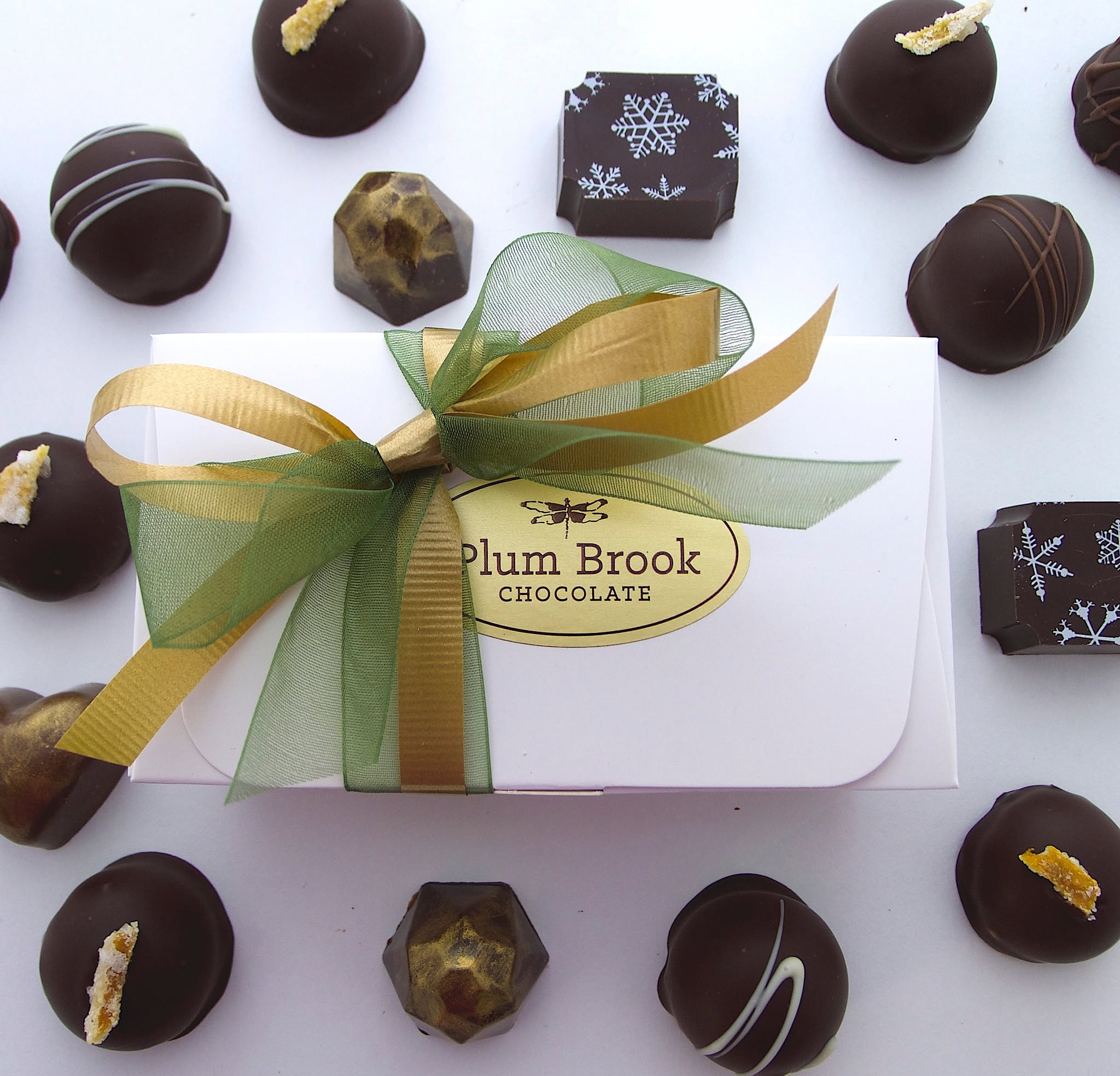
Years later, I’d know a lot more and would open Plum Brook Chocolate. I’d know why mass-market chocolate—mostly sugar and palm oil—offers none of the flavor complexity. I’d appreciate the importance of American chocolate maker Guittard, a brand rooted in a mission of environmental protection and human rights.
Falling in love with all the flavors of real chocolate is what changed my Snickers habit, but learning about Big Chocolate’s* exploitation of farmers, children, and the planet, sealed the deal for me.
I know that choosing craft chocolate can really make a difference. In this 3-part series, I’m diving into why choosing bean-to-bar chocolate is not just something your taste buds will love, but something that can actually change the world.
We’ll start today at the root of the problem: how a few massive companies control almost all the world’s cocoa supply, turning chocolate into a cheap commodity that perpetuates farmer poverty—and how craft chocolate offers a solution.
Part 2 will tackle the child labor crisis deeply entrenched in mass-market chocolate—and how craft chocolate offers an ethical alternative that eliminates the need for this exploitation.
We’ll wrap up in Part 3 by exposing the environmental toll of Big Chocolate and its link to deforestation—and how craft chocolate offers a sustainable path forward to restore the rainforest.
These are heavy issues for sure. But, in order for me to write about all the cool stuff pertaining to the amazing world of craft chocolate, this elephant in the room must be addressed. There’s plenty of time for the lighter, more fun stuff that reflects the joy of discovery and the bliss that is craft chocolate.
Speaking of bliss, it’s time to go crush my afternoon Askinosie malt ball craving.
OK. Ready to read further? Let’s get into it.
___________________________________________________
Eat Craft Chocolate—Change the World
Part 1: Trading Farmer Poverty for Fair-Wage Cocoa
Consider this: A single candy bar in the checkout aisle costs about $2.00—yet the West African farmer who grew the cacaoCacao is the seed (bean) of the cacao fruit, which is used to make chocolate. The beans are fermented, dried, roasted, and processed into products such as cocoa powder, cacao nibs, and chocolate. More to make it rarely takes home even a fraction of that amount for an entire day of backbreaking labor.
Millions of West African farmers, who produce roughly 70% of the world’s cocoa supply, live in deep poverty. They are exploited by a handful of mega-corporations who pay farmers a pittance for their harvest, while pocketing massive profits.{1}
From Currency to Commodity
Long before it became a cheap commodity cacaoCacao is the seed (bean) of the cacao fruit, which is used to make chocolate. The beans are fermented, dried, roasted, and processed into products such as cocoa powder, cacao nibs, and chocolate. More was considered sacred, a form of wealth. It was prepared as a drink for ceremonial rituals among pre-Columbian civilizations. The beans were so valuable to the Aztecs and Mayans that it was used as currency. To possess cacaoCacao is the seed (bean) of the cacao fruit, which is used to make chocolate. The beans are fermented, dried, roasted, and processed into products such as cocoa powder, cacao nibs, and chocolate. More beans was a sign of wealth and power.
When Spanish conquistadors brought the beans to Europe in the 1500s, it quickly became a luxury drink for the elites. To meet an increasing demand, colonial powers moved cacaoCacao is the seed (bean) of the cacao fruit, which is used to make chocolate. The beans are fermented, dried, roasted, and processed into products such as cocoa powder, cacao nibs, and chocolate. More production to West African colonies and used slaves for labor.
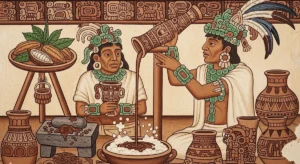

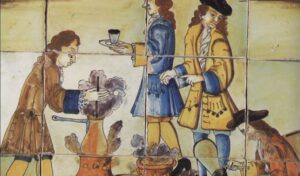
Fast forward to the invention of the cocoa press in 1828. This machine squeezed cocoa butter from the roasted bean, and the first chocolate bar was molded. The Industrial Revolution had transformed cocoa from a rare luxury treat into a mass-manufactured product.
In the early 1900s, as legal slavery ended, cocoa production shifted to thousands of small, independent family farms. Big Chocolate turned cocoa into a cheap commodity that trapped West African farming families in a cycle of systemic poverty that persists today. [1, 2]
Over 75% of cacaoCacao is the seed (bean) of the cacao fruit, which is used to make chocolate. The beans are fermented, dried, roasted, and processed into products such as cocoa powder, cacao nibs, and chocolate. More farmers in West Africa do not earn a living wage. Their small family farms average under 10 acres and are located where cacaoCacao is the seed (bean) of the cacao fruit, which is used to make chocolate. The beans are fermented, dried, roasted, and processed into products such as cocoa powder, cacao nibs, and chocolate. More trees thrive, within 20 degrees from the equator. These farms are in rural, tropical areas at the very beginning of a long, opaque supply chain with a dizzying array of middlemen. Cut off from the global market, these hard-working families have no power and no other way to sell their crop. [1,2]
By the time the beans reach the end of the chain, middlemen have taken most of the money. What’s left is squeezed out even more by huge conglomerates who sell it to Big Chocolate.
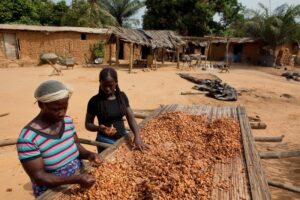
Photo courtesy of Oxfam
Craft Chocolate is Breaking this Cycle of Poverty
Craft chocolate makers are disrupting this entrenched system by treating cocoa like fine wine or specialty coffee. Shifting the focus to quality and flavor is altering how farmers are compensated.
Put simply, they’re cutting out most or all middlemen and sourcing directly from farmers (Direct Trade) or farmer cooperatives (Fair Trade). Long-term partnerships and fairer price agreements give farmers a living wage.
Unlike industrial buyers, craft makers pay a premium based on the unique flavor profile and quality of the bean, raditionally paying 3-10x higher prices than commodity cocoa.[3] There is transparency, allowing makers to trace the beans directly back to where it was grown.
Mass-produced beans, often of inferior quality, are harvested from thousands of different farms, dumped by the ton into massive silos and bagged with zero traceability. This process completely wipes out both transparency and the unique regional flavor profiles, known as terroir. Because Big Chocolate. values maximizing yield over bean quality, tracing the product back to its source becomes impossible. For years they have used this lack of traceability as an excuse to avoid accountability, perpetuating a brutal cycle of poverty. (And child labor which we’ll cover in Part 2).
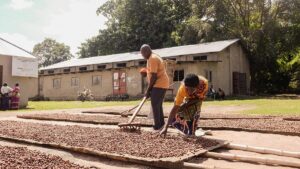
Photo Courtesy of Askinosie Chocolate
Craft chocolate is all about the bean’s integrity. These makers collaborate with farmers, educating them on best practices, to improve their quality and yield. The result is superior beans. And superior beans, expertly handled, mean extraordinary chocolate.
Most craft chocolate makers profit-share with the farmers, often visiting their farms and paying them directly. When you choose a craft chocolate bar or confection those few extra dollars go straight to the farmers. It honors the farmer’s skill and their desire to build a better future for their family.
And then there’s the luscious perk of tasting true, rich chocolate—experiencing that bittersweet rush the Mayans and Aztecs did when they worshipped it as a sacred drink.
FUN FACT: About 90% of the world’s cacaoCacao is the seed (bean) of the cacao fruit, which is used to make chocolate. The beans are fermented, dried, roasted, and processed into products such as cocoa powder, cacao nibs, and chocolate. More is grown on small family farms of less than five acres, located within 20 degrees of the equator.
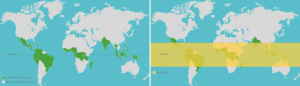
Cocoa Belt: CacaoCacao is the seed (bean) of the cacao fruit, which is used to make chocolate. The beans are fermented, dried, roasted, and processed into products such as cocoa powder, cacao nibs, and chocolate. More can only thrive within 20 degrees north or south of the equator.
Footnotes:
{1] Sweet Profits, Bitter Truth
Next in the series, we’re tackling an even more bitter topic: child labor and slavery in cocoa. We’ll dive into how your chocolate choices can help end it, and why buying craft chocolate is an investment in a child’s future.