Artisanal Hand-Crafted Fine Chocolate

HOLIDAY TRUFFLES

tile_dark-chocolate-gingerbread-truffles-1

TRUFFLES FOR THE HOLIDAYS

The year-end holiday season – whether it involves Christmas, Hanukkah, Kwanzaa or some other treasured family celebration – evokes nostalgia in many of us. Many of you bake homemade goodies to give as gifts or take to cookie swaps and what is more appreciated than something from the heart and the kitchen?

Creamy and elegant, these truffles have a soft, melt-in-your-mouth filling. Beautiful enough to give as gifts or serve to guests, this truffle recipe is easy, too!

The key is to keep it simple and use the best ingredients you can find and you will end up with a rich, creamy ganache. What is “ganache” and how did it get that name? It’s simply a mixture of chocolate and cream. Rumor has it that a chef called an assistant a “ganache” (French word for idiot) when he dumped hot cream into a bowl of chocolate. Serendipity I say!

Be prepared to get your hands “dirty” with chocolate!

SPIRITED DARK CHOCOLATE TRUFFLES

Yield: 12-15 truffles

Ingredients

4 oz. whipping cream
7 oz. finest quality dark chocolate (61% or higher)*
1/2 oz. butter, very soft but not melted
1 oz. bourbon whiskey (if you’re not a fan of bourbon, substitute another liquor)
1/2 cup cocoa powder

Bring whipping cream just to boil.

Pour slowly over the chocolate and mix rapidly to create an elastic and shiny mixture. Add butter and mix it again with the spatula. Add bourbon whiskey and mix to incorporate.

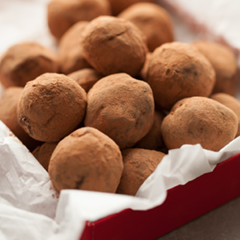
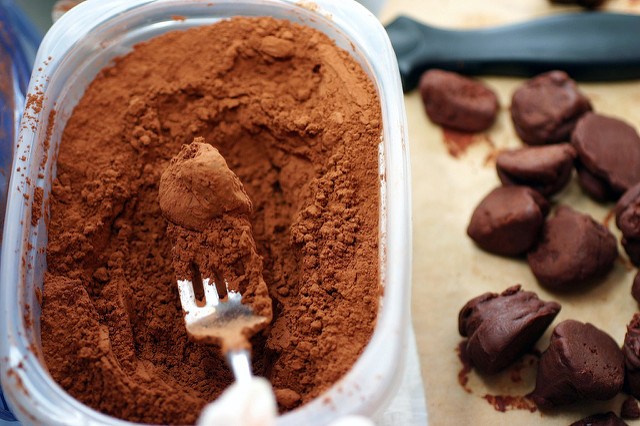
Let ganache set for 12 hours in the refrigerator or till firm enough to handle. Dust hands with cocoa powder and shape into one inch balls using a scoop or teaspoon and roll in cocoa to coat surface.
2137443062_d74036e28e_z

Drop in cocoa powder and roll around with a fork.

Store covered in refrigerator until ready to serve. Serve at room temperature. Enjoy compliments!

Variation: After rolling in cocoa powder, drop into finely chopped nuts (we like hazelnuts), pressing lightly.

*I use Guittard Chocolate, a 4th generation family owned San Francisco chocolate maker.

Photos courtesy of Ecole Chocolat.
The Hacienda Jeanmarie – Visiting a Puerto Rican Cacao Farm

CacaoTree2

If cacao trees only thrive 20 degrees north or south of the equator, why doesn’t Puerto Rico have any industry?  Every year I wondered this as I made my way to west-coast Rincón where my parents winter. I’d check out the latest on cacao production there hoping to find a farm nearby. During a visit to the agricultural research center in Mayaguez a few years ago I learned that Puerto Rico has an interesting cacao story (see my blog post “At The Foot of a Cacao Tree).  In the 17th century a hurricane wiped out most of the cacao crop and it was abandoned for easier-to-grow sugar cane and coffee.

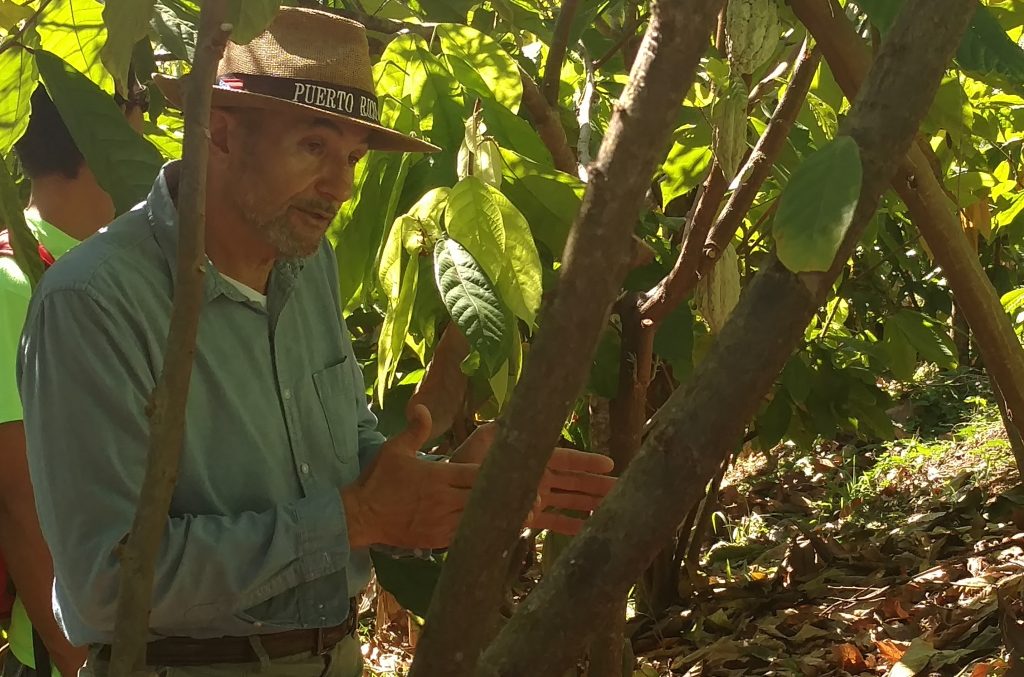
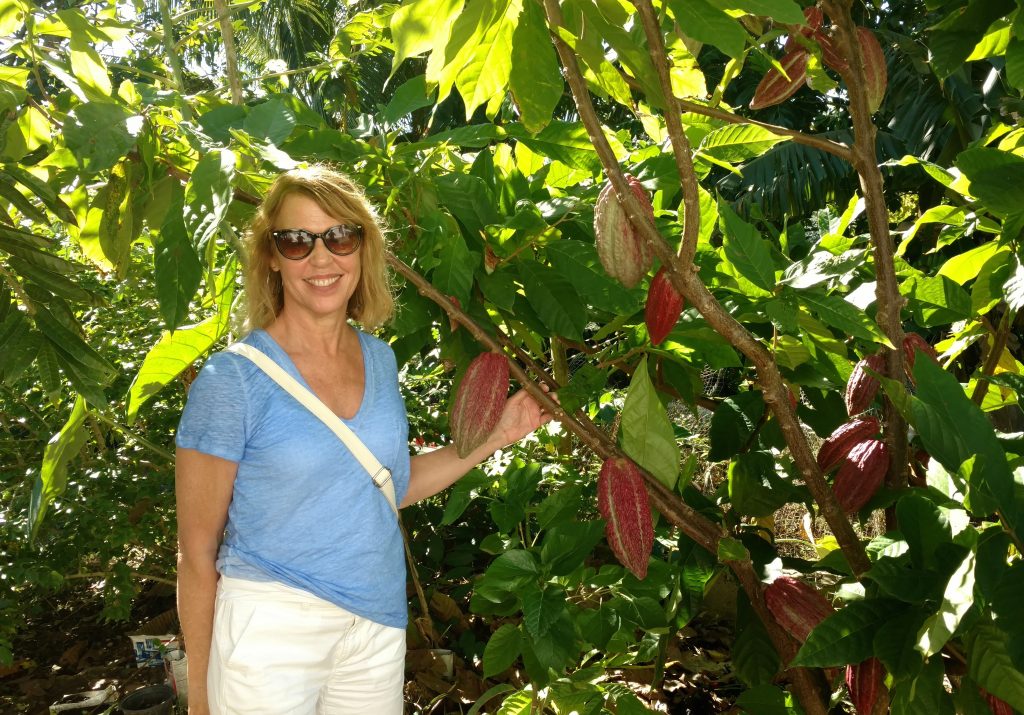
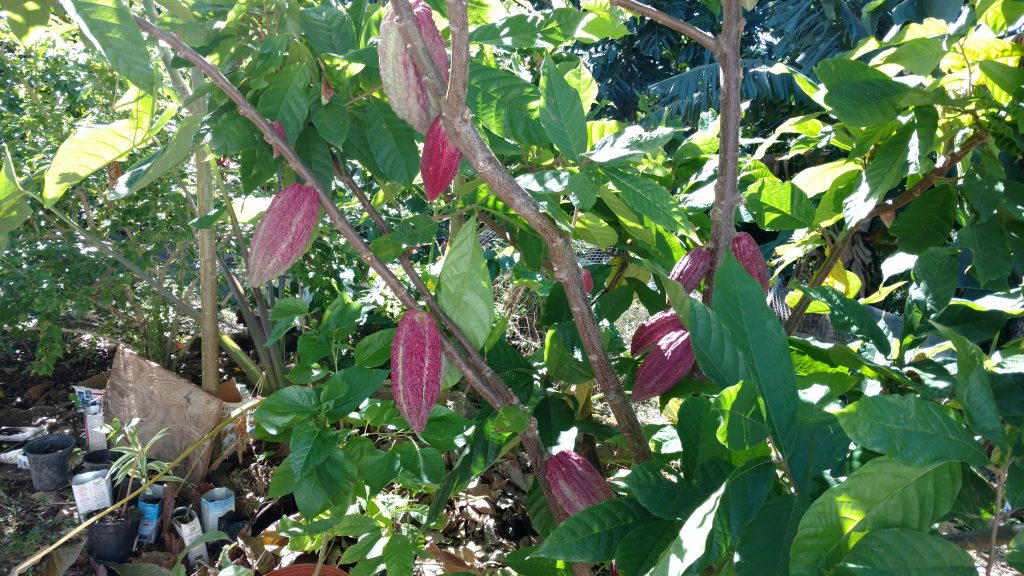
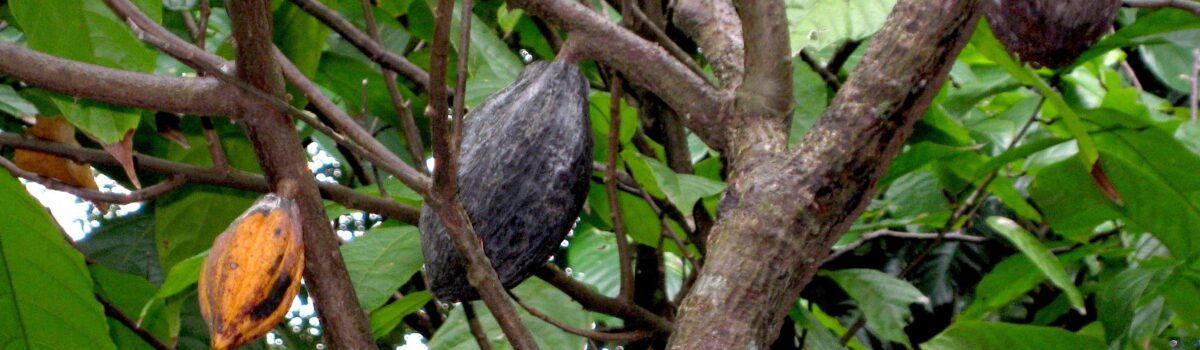
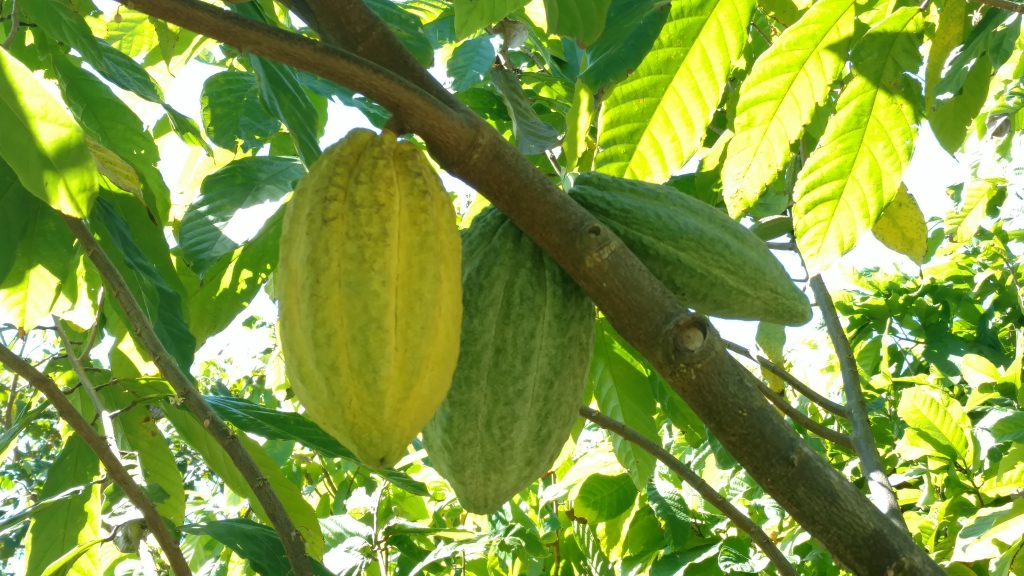
Juan2Thanks to the Puerto Rico Cacao Project, farms are cropping up again and Juan Echevaría  is leading the way.  He began to grow cacao on his family’s farm when he found some 17th century prized criollo trees on the land.  I was thrilled to visit  his Hacienda Jeanmarie a few weeks ago, walking among healthy cacao trees growing in the shade of other crops, seeing the different species and colors of pods and gaining knowledge from this passionate, articulate and intelligent man.

Juan explained how he harvests, ferments, dries and processes his beans in a traditional hand cultivated fashion.  He is dedicated to teaching and assisting others with the goal of eventually building a working cooperative that connects small organic cocoa farmers in Puerto Rico to the fine chocolate industry through direct, transparent relationships.

Juan
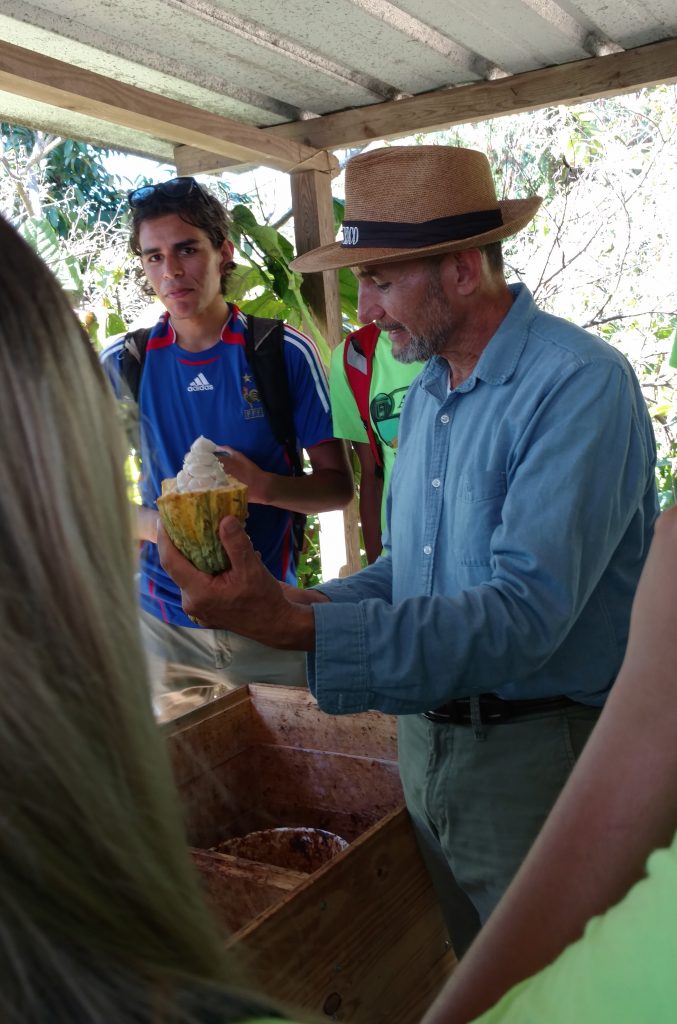
Juan opens a freshly cut pod and offers cacao pulp.


dryingcaco
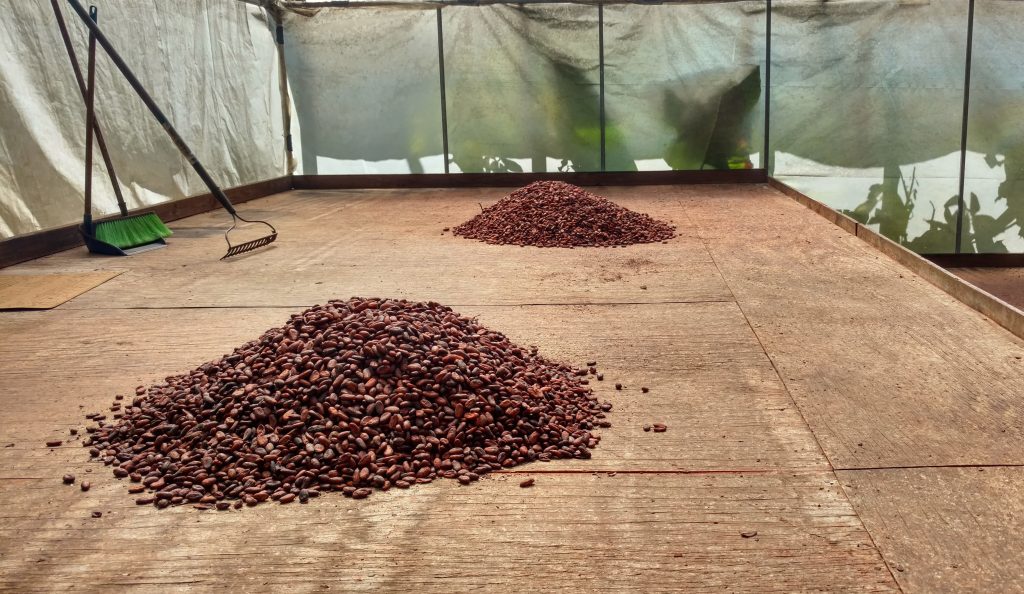
                                   After fermentation the beans are naturally dried

Historically cacao farmers are impoverished because – put simply – the revenue they receive does not cover their cost of production.  By removing middlemen, farmers increase their value and quality, creating a positive social impact to farming communities while delivering premium quality cocoa to chocolate makers.  Juan is trying to drive this business model in Puerto Rico and to one day have his country recognized as producing some of the world’s best chocolate.

Taking advantage of Juan’s hospitality, I stayed and chatted long after the group on our little tour left.  I sampled his 100% chocolate bar, a rich melody of rustic fruity chocolate flavor and left with enough to make a batch of truffles.

I will go back to Juan’s farm again and look forward to witnessing the thoughtful growth of cacao production in Puerto Rico through his efforts.  Another incredible experience, place and friendship made in my lifelong chocolate journey.

PamCacaoTree

CacaoTree

At the Foot of a Cacao Tree: A Note from Puerto Rico

When the conquistadors brought cacao across the Atlantic from South America, it was a difficult-to-obtain luxury in the Western world.

Cacao only grows within twenty degrees of the equator, requires some shade, and produces only a few pods per harvest. This makes the price of chocolate volatile, like the price of oil.

Lately, rising demand for cacao in developing countries has created a shortage. According to a March 2014 article in the Wall Street Journal, some big candy makers are now resorting to a cacao variety called CCN 51 that yields more beans but produces chocolate with a sour flavor. Needless to say, those chocolate makers value profit over  taste and quality.

I recently was able to visit Puerto Rico, where the Puerto Rican Cacao Project is evaluating the potential for commercial cacao production on the island. In the mid-1600’s, cacao was one of Puerto Rico’s biggest export crops, until a hurricane at the end of the 17th century caused a food shortage that forced farmers to abandon it. The Puerto Rican Cacao Project collects samples from old cacao trees on the island to preserve their genetic variability. “Unique cacao on the island,” reads its website, “might make Puerto Rican cacao and chocolate stand out.”

My parents winter in Puerto Rico, and while visiting them this month, I decided to go to the Tropical Agricultural Research Station (TARS) in Mayaguez. In this complex, funded by the US Department of Agriculture, cacao and other tropical crops are preserved and studied.  The visitor’s entrance led to a beautiful old hacienda style building, where a friendly woman directed us to the cacao plants.

cacaobeans

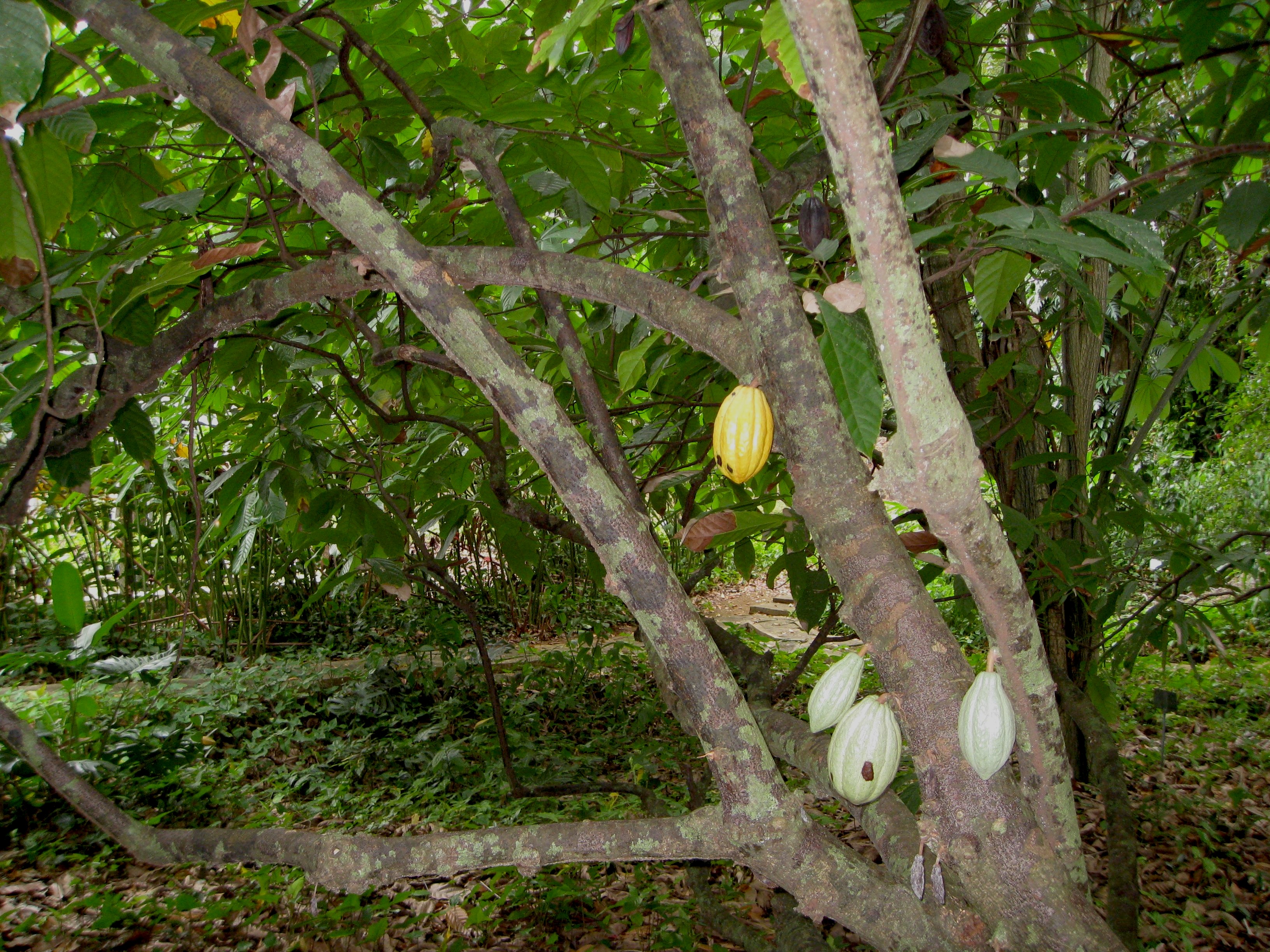
The cacao tree there was 50 years old and 24 feet high. Farmed cacao trees can grow as high as 26 feet and live about 60 years, so this one was definitely mature. Although not abundant with fruit (yes, the cocoa you eat started as a fruit!), the tree was still producing beautiful pods.  Flower buds along its trunk indicated that more pods were in the making.

Until the day when I actually visit a working cacao farm, this will have to do. It was a thrill to see the tree once named the “food of the gods” up close and personal. To understand how it grows and the elaborate process required to transform a cacao pod into chocolate gives me reverence for this amazing fruit.